Mary Ann
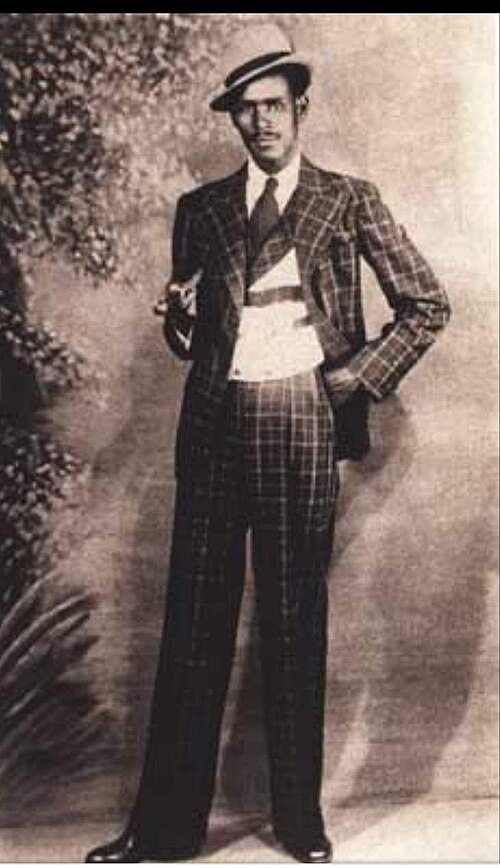
(22 February 1908 – 11 July 1999)
| Name of Calypsonian | Roaring Lion |
|---|---|
| Real Name | Rafael de Leon |
| Album Title | Calypso Carnival |
| Release Year | 1945-1946 |
| Record Label | Not available |
Music video of Mary Ann by The Roaring Lion.
Calypso Lyrics
| Roaring Lion |
| All day, all night, Miss Mary Ann Down by the seaside she’s sifting sand Strings on her banjo can tie ah goat Water from the ocean can sail ah boat |
| V-J Day was bacchanal The whole island played Carnival People were jumping to and fro To the rhythm of a red-hot calypso Hear they singing |
| All day, all night, Miss Mary Ann Down by the seaside she’s sifting sand Strings on her banjo can tie ah goat Water from the ocean can sail ah boat |
| Come up, Mr. Coleman |
| Port of Spain was really a scene And pandemonium reigned supreme A red-letter day we can’t forget Young and old, black and white, was in the fête Hear they singing |
| All day, all night, Miss Mary Ann Down by the seaside she’s sifting sand Strings on her banjo can tie ah goat Water from the ocean can sail ah boat |
| Come up, Freddie Grant |
| The whole island was on parade That was a royal masquerade There were the bat, dragon, and drum And the Indian with they horses coming down Hear them singing |
| All day, all night, Miss Mary Ann Down by the seaside she’s sifting sand Strings on her banjo can tie ah goat Water from the ocean to sail ah boat |
| All day, all night, Miss Mary Ann Down by the seaside she’s sifting sand Strings on her banjo can tie ah goat Water from the ocean can sail ah boat |
| Roaring Lion |
| All day, all night, Miss Mary Ann Down by the seaside she’s sifting sand Strings on her banjo can tie a goat Water from the ocean can sail a boat |
| V-J Day was bacchanal The whole island played Carnival People were jumping to and fro To the rhythm of a red-hot calypso Hear them singing |
| All day, all night, Miss Mary Ann Down by the seaside she’s sifting sand Strings on her banjo can tie a goat Water from the ocean can sail a boat |
| Come up, Mr. Coleman |
| Port of Spain was really a scene And pandemonium reigned supreme A red-letter day we can’t forget Young and old, black and white, were in the fête Hear them singing |
| All day, all night, Miss Mary Ann Down by the seaside she’s sifting sand Strings on her banjo can tie a goat Water from the ocean can sail a boat |
| Come up, Freddy Grant |
| The whole island was on parade That was a royal masquerade There were the bat, dragon, and drum And the Indian with their horses coming down Hear them singing |
| All day, all night, Miss Mary Ann Down by the seaside she’s sifting sand Strings on her banjo can tie a goat Water from the ocean to sail a boat |
| All day, all night, Miss Mary Ann Down by the seaside she’s sifting sand Strings on her banjo can tie a goat Water from the ocean can sail a boat |
About The Calypso
“Mary Ann” is one of the best-known calypsos composed and performed by the Roaring Lion, widely regarded as one of the most influential figures in calypso history. The calypso remains one of his signature compositions and is still recognized today.
The calypso gained widespread popularity in Trinidad and Tobago during the celebrations that followed V-J Day (Victory over Japan Day) in 1945, marking the end of World War II. Steelbands and revellers embraced the song, helping it become part of the country’s musical landscape.
The repeated chorus beginning with “All day, all night, Miss Mary Ann” is among the most recognizable lines in classic calypso. It has a simple, sing-along style which made it popular with audiences of all ages.
Like many classic calypsos, “Mary Ann” relies on humour, wordplay, and vivid imagery. Rather than delivering a serious social message, the calypso is remembered primarily for its playful storytelling and catchy melody.
For many years, “Mary Ann” was a regular feature in steelband performances and traditional calypso shows throughout the Caribbean, helping it endure long after its original release.
During the growth of international interest in Caribbean music, “Mary Ann” became one of the calypsos that introduced overseas audiences to Trinidadian calypso traditions.
Trivia
Outside the Caribbean, the calypso often appeared under the title “Marianne” rather than “Mary Ann.” The alternate spelling became especially popular in North America during the calypso boom of the 1950s.
In 1957, Terry Gilkyson and the Easy Riders as well as The Hilltoppers recorded versions of “Marianne” which became major chart hits in the United States, introducing the calypso to millions of listeners.
Harry Belafonte recorded the calypso on multiple albums, helping to keep it alive during the international calypso craze of the 1950s and 1960s.
Beyond English-language recordings, “Marianne” was adapted and performed by artistes from several countries, including French-language versions that became successful in Europe.
In Ian Fleming’s 1958 novel Dr. No, the calypso is referenced when characters whistle and sing portions of it on a Jamaican beach. This gave the calypso a small place in the literary history of James Bond.
Although many overseas listeners first heard “Marianne” through American folk and pop recordings, the calypso originated with the Roaring Lion and was popular locally years before the international hit versions appeared.
For decades, visitors to the Caribbean heard “Mary Ann” performed by hotel bands, steelbands, and calypso entertainers, making it one of the enduring classics of the genre.
Because the calypso became associated with the celebrations marking the end of World War II, it serves as a musical reminder of a joyful period in the history of Trinidad and Tobago when people took to the streets to celebrate peace.
References
The image of the Roaring Lion was taken from the Wikipedia article about him [1].
[1] https://en.wikipedia.org/wiki/Roaring_Lion_(calypsonian)