Main To Diwana
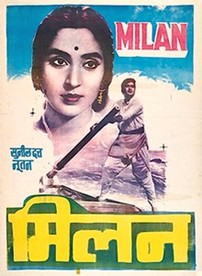
| Song Title | Main To Diwana |
| Movie Title | Milan |
| Date Released (India) | March 17, 1967 |
| Date Released (Trinidad) | Unknown |
| Singer | Mukesh |
| Lyricist | Anand Bakshi |
| Composer | Laxmikant-Pyarelal |
| Starring | Sunil Dutt, Nutan, Pran, Jamuna |
Music video of Main To Diwana from the movie Milan.
Song Lyrics
| Mukesh | Mukesh |
| Mubaarak ho sab ko sama yeh suhaana Main khush hoon mere aansuo pe na jaana Main toh diwana, diwana, diwana Main toh diwana, diwana, diwana Mubaarak ho sab ko sama yeh suhaana Main khush hoon mere aansuo pe na jaana Main toh diwana, diwana, diwana Main toh diwana, diwana, diwana | Congratulations to everyone on this wonderful occasion. I am happy, don’t be misled by my tears I am just another madman I am just another madman Congratulations to everyone on this wonderful occasion. I am happy, don’t be misled by my tears I am just another madman I am just another madman |
| Hajaaro tarah ke yeh hote hai aansu Hajaaro tarah ke yeh hote hai aansu Agara dil mein ghum ho toh rote hai aansu Khushi mein bhi aankhen Khushi mein bhi aankhen bhigote hai aansu Inhein jaan sakata nahi yeh zamaana Main khush hoon mere aansuo pe na jaana Main toh diwana, diwana, diwana Main toh diwana, diwana, diwana | There are thousands of reasons for tears There are thousands of reasons for tears Heartbreaks cause tears Joys, too Joys, too, cause tears to wet the eyes Tears are an enigma to the world I am happy, don’t be misled by my tears I am just another madman I am just another madman |
| Yeh shehanaayiya de rahi hai duhaayi Yeh shehanaayiya de rahi hai duhaayi Koyi cheez apani huyi hai paraayi Kisi se milan hai Kisi se milan hai kisi se judaayi Naye rishton ne toda naata puraana Main khush hoon mere aansuo pe na jaana Main toh diwana, diwana, diwana Main toh diwana, diwana, diwana | The music is heart-rending as is the parting The music is heart-rending as is the parting Someone who belonged to me has now become a stranger In this meeting of two hearts In this meeting of two hearts, someone is ignored Old ties have given way to new ones I am happy, don’t be misled by my tears I am just another madman I am just another madman |
| Yeh bole samay ki nadi ka bahaav Yeh bole samay ki nadi ka bahaav Yeh baabul ki galiya, yeh maajhi ki naav Chali ho toh gori Chali ho toh gori suno bhul jaao Na phir yaad karna, na phir yaad aana Main khush hoon mere aansuo pe na jaana Main toh diwana, diwana, diwana Main toh diwana, diwana, diwana | The flow of the river of time says The flow of the river of time says Your father’s house, my boat Now that you are leaving Now that you are leaving, listen, forget us Don’t miss us, don’t let your memories haunt us, either I am happy, don’t be misled by my tears I am just another madman I am just another madman |
| Mubaarak ho sab ko sama yeh suhaana Main khush hoon mere aansuo pe na jaana Main toh diwana, diwana, diwana Main toh diwana, diwana, diwana | Congratulations to everyone on this wonderful occasion. I am happy, don’t be misled by my tears I am just another madman I am just another madman |
Mukesh |
Mubaarak ho sab ko sama yeh suhaana Main khush hoon mere aansuo pe na jaana Main toh diwana, diwana, diwana Main toh diwana, diwana, diwana Mubaarak ho sab ko sama yeh suhaana Main khush hoon mere aansuo pe na jaana Main toh diwana, diwana, diwana Main toh diwana, diwana, diwana |
Hajaaro tarah ke yeh hote hai aansu Hajaaro tarah ke yeh hote hai aansu Agara dil mein ghum ho toh rote hai aansu Khushi mein bhi aankhen Khushi mein bhi aankhen bhigote hai aansu Inhein jaan sakata nahi yeh zamaana Main khush hoon mere aansuo pe na jaana Main toh diwana, diwana, diwana Main toh diwana, diwana, diwana |
Yeh shehanaayiya de rahi hai duhaayi Yeh shehanaayiya de rahi hai duhaayi Koyi cheez apani huyi hai paraayi Kisi se milan hai Kisi se milan hai kisi se judaayi Naye rishton ne toda naata puraana Main khush hoon mere aansuo pe na jaana Main toh diwana, diwana, diwana Main toh diwana, diwana, diwana |
Yeh bole samay ki nadi ka bahaav Yeh bole samay ki nadi ka bahaav Yeh baabul ki galiya, yeh maajhi ki naav Chali ho toh gori Chali ho toh gori suno bhul jaao Na phir yaad karna, na phir yaad aana Main khush hoon mere aansuo pe na jaana Main toh diwana, diwana, diwana Main toh diwana, diwana, diwana |
Mubaarak ho sab ko sama yeh suhaana Main khush hoon mere aansuo pe na jaana Main toh diwana, diwana, diwana Main toh diwana, diwana, diwana |
| Mukesh |
| Mubaarak ho sab ko sama yeh suhaana Main khush hoon mere aansuo pe na jaana Main toh diwana, diwana, diwana Main toh diwana, diwana, diwana Mubaarak ho sab ko sama yeh suhaana Main khush hoon mere aansuo pe na jaana Main toh diwana, diwana, diwana Main toh diwana, diwana, diwana |
| Hajaaro tarah ke yeh hote hai aansu Hajaaro tarah ke yeh hote hai aansu Agara dil mein ghum ho toh rote hai aansu Khushi mein bhi aankhen Khushi mein bhi aankhen bhigote hai aansu Inhein jaan sakata nahi yeh zamaana Main khush hoon mere aansuo pe na jaana Main toh diwana, diwana, diwana Main toh diwana, diwana, diwana |
| Yeh shehanaayiya de rahi hai duhaayi Yeh shehanaayiya de rahi hai duhaayi Koyi cheez apani huyi hai paraayi Kisi se milan hai Kisi se milan hai kisi se judaayi Naye rishton ne toda naata puraana Main khush hoon mere aansuo pe na jaana Main toh diwana, diwana, diwana Main toh diwana, diwana, diwana |
| Yeh bole samay ki nadi ka bahaav Yeh bole samay ki nadi ka bahaav Yeh baabul ki galiya, yeh maajhi ki naav Chali ho toh gori Chali ho toh gori suno bhul jaao Na phir yaad karna, na phir yaad aana Main khush hoon mere aansuo pe na jaana Main toh diwana, diwana, diwana Main toh diwana, diwana, diwana |
| Mubaarak ho sab ko sama yeh suhaana Main khush hoon mere aansuo pe na jaana Main toh diwana, diwana, diwana Main toh diwana, diwana, diwana |
| Mukesh |
| Congratulations to everyone on this wonderful occasion. I am happy, don’t be misled by my tears I am just another madman I am just another madman Congratulations to everyone on this wonderful occasion. I am happy, don’t be misled by my tears I am just another madman I am just another madman |
| There are thousands of reasons for tears There are thousands of reasons for tears Heartbreaks cause tears Joys, too Joys, too, cause tears to wet the eyes Tears are an enigma to the world I am happy, don’t be misled by my tears I am just another madman I am just another madman |
| The music is heart-rending as is the parting The music is heart-rending as is the parting Someone who belonged to me has now become a stranger In this meeting of two hearts In this meeting of two hearts, someone is ignored Old ties have given way to new ones I am happy, don’t be misled by my tears I am just another madman I am just another madman |
| The flow of the river of time says The flow of the river of time says Your father’s house, my boat Now that you are leaving Now that you are leaving, listen, forget us Don’t miss us, don’t let your memories haunt us, either I am happy, don’t be misled by my tears I am just another madman I am just another madman |
| Congratulations to everyone on this wonderful occasion. I am happy, don’t be misled by my tears I am just another madman I am just another madman |
About The Lyrics
The Hindi lyrics of this song were obtained from the Gaana.com website [1]. The English translation of most of the song was taken from the English subtitles of the original movie. The final versions of the Hindi lyrics and English translation were put together by P. Mohan [2] using Google Translate.
Fun Facts
The central phrase, “main to diwana” (मैं तो दीवाना), is a statement of identity which means, “I am just another madman“. This is a common theme in Indian poetry, where the unrequited lover is often portrayed as a diwana, or a crazy person. with “diwana” (दीवाना) being a Persian-derived term for a “madman“, “lover“, or someone “crazy” with passion.
In this context, it’s a tragic declaration as the singer sees himself as a madman whose joy is so great that people might not understand his tears. This is further explained in the line “khushi mein bhi aankhen bhigote hai aansoo” (ख़ुशी में भी आँखें भिगोते हैं आँसू), which translates to “even in happiness, tears wet the eyes,” capturing the complexity of his forced joy.
The song’s emotional core lies in the contradiction between the joyous occasion, referred to as “sama suhaana” (समा सुहाना), meaning “beautiful atmosphere,” and the protagonist’s hidden pain, revealed only through his tears (aansoo). He states that tears can be caused by both sorrow and joy, making them an “enigma to the world.”
The song uses other powerful words and metaphors to convey its message. The sound of wedding music, “Shehnaayiya” (शहनाईयाँ), is ironically described as “duhaayi” (दुहाई), or “a cry for help,” as it announces a painful separation. The line “naye rishton ne toda naata puraana” (नए रिश्तों ने तोड़ा नाता पुराना) translates to “new relationships have broken old ties,” a direct reference to the love triangle that drives the film’s plot. The final stanza uses the metaphor of a river of time (samay ki nadi) and the boatman’s (maajhi) boat, as the bride leaves her father’s house (baabul ki galiya), urging her to forget her past and her love, highlighting the finality of their separation.
References
[1] https://gaana.com/lyrics/main-to-diwana
[2] Mohan, Permanand. Life in Trinidad: A Journey Through Bollywood Film Songs and Trini Calypso. https://lifeintrinidad.org/