Rum and Coca Cola
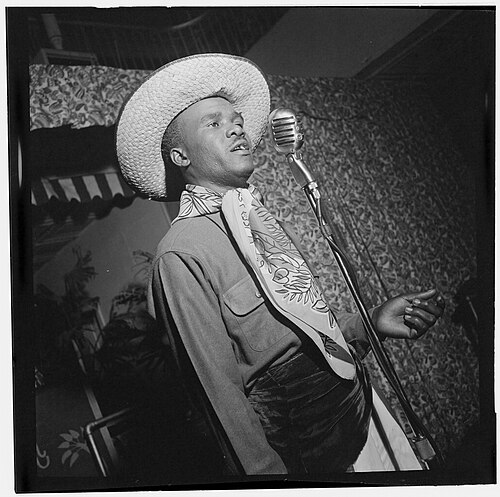
(13 December 1914 – 15 October 1961)
| Name of Calypsonian | Lord Invader |
|---|---|
| Real Name | Rupert Westmore Grant |
| Album Title | None |
| Release Year | 1943 |
| Record Label | None |
Music video of Rum and Coca Cola by Lord Invader.
Calypso Lyrics
| Lord Invader |
| And when the Yankees first went to Trinidad Some of the young girls were more than glad They said that the Yankees treat them nice And they give them a better price They buy: |
| Rum and Coca-Cola Went down Point Cumana Both mothers and daughters Working for their Yankee dollars |
| Rum and Coca-Cola Going down Point Cumana Both mothers and daughters Working for their Yankee dollars |
| And look, I had a little chick the other day But her mother came and took her away Herself, her mother, and her sisters Went in a cab with some soldiers They bought: |
| Rum and Coca-Cola Went down Point Cumana Both mothers and daughters Working for their Yankee dollars |
| They have some aristos in Port of Spain I know a lot, but I won’t call name And in the day they wouldn’t give you a right But you would see them with the foreigners late at night Drinking: |
| Rum and Coca-Cola Going down Point Cumana Both mothers and daughters Working for their Yankee dollars |
| I know a couple who got married one afternoon And was to go to Miami on their honeymoon But the bride run away with a soldier lad And the stupid husband went staring mad They bought: |
| Rum and Coca-Cola Going down Point Cumana Both mothers and daughters Working for their Yankee dollars |
About The Calypso
Lord Invader wrote the lyrics of “Rum and Coca-Cola” in 1943, during the period when thousands of American servicemen were stationed in Trinidad under the wartime U.S. bases agreement for World War II. The calypso comments on the social changes that accompanied the arrival of the troops.
Many people assume the calypso celebrates the drinking of alcohol, but the original calypso was actually a sharp social commentary on wartime life in Trinidad. Through humour and satire, Lord Invader highlighted how the arrival of American troops was reshaping local customs, relationships, and economic opportunities. The famous line, “Both mothers and daughters working for their Yankee dollars,” reflected concerns about the strong economic influence of American servicemen and the social changes taking place in Trinidad during the war years.
While Lord Invader wrote the lyrics, the melody was based on “L’Année Passée,” a composition by musician Lionel Belasco, originally published decades earlier. Belasco later became involved in the legal disputes surrounding the calypso’s ownership.
The calypso became extremely popular locally in Trinidad in 1943, particularly among audiences attending calypso tents during Carnival season and during the wartime years.
The original lyrics were far more pointed than later versions. Lord Invader’s version explored changing social values, the growing influence of American servicemen, and the ways in which money and opportunity affected relationships within Trinidadian society.
“Rum and Coca-Cola” is often regarded as one of the most internationally significant calypsos ever written because it introduced large audiences outside the Caribbean to calypso music and Trinidadian social commentary.
The Andrews Sisters made the calypso a global phenomenon a year later. Their 1944 recording became one of the biggest hits of 1945 and introduced millions of listeners to a calypso-inspired song. It is often considered the first calypso to become a major American pop hit.
Although the Andrews Sisters’ version became more famous, Lord Invader continued performing the calypso and recorded it himself in later years, including performances in New York during the postwar calypso boom.
Trivia
The calypso sparked one of the most famous copyright battles in calypso history. American entertainer Morey Amsterdam copyrighted a version of the calypso in the United States after visiting Trinidad in 1943 and sold it to the Andrew Sisters. Lord Invader sued him and the Andrew Sisters, arguing that his lyrics had been copied. The courts ultimately ruled in Lord Invader’s favour.
The lawsuit resulted in Lord Invader receiving a significant financial award, often reported as approximately $132,000 USD, a significant sum for a Caribbean calypsonian of that era. However, Lord Invader reportedly had to wait several years before receiving the settlement funds (some say 7 years).
The calypso was banned by some radio stations for reasons such as the following:
- It mentioned an alcoholic beverage (“rum”).
- Its lyrics contained adult social themes that some broadcasters considered unsuitable for radio audiences at the time.
- It referred to the trademarked product Coca-Cola. Coca-Cola was reportedly unhappy about the title which linked its product with alcohol and the calypso’s suggestive subject matter.
The calypso was circulating in Trinidad before it was commercially recorded. There were limited recording opportunities due to wartime conditions, which helped to create the unusual situation in which others recorded and copyrighted the calypso before Lord Invader’s own version became widely available.
The legal battle surrounding “Rum and Coca-Cola” became an early and highly visible example of Caribbean artistes fighting for recognition and compensation when their work was used internationally.
It remains one of Trinidad and Tobago’s most famous calypsos. More than eighty years after it was written, “Rum and Coca-Cola” continues to be discussed not only because of its catchy melody, but because it captures a unique moment in Trinidad and Tobago’s social history.
References
The image of Lord Invader was taken from the Wikipedia article on Lord Invader [1].
[1] https://www.discogs.com/release/11548799-Mighty-Sniper-Old-Women-Scandal